OisiO
OisiOFrom a classroom,
to metro posters.
A connected bird feeder that identifies the birds in your garden. A school project turned entrepreneurial adventure, between the idea to defend, crowdfunding, iterations and difficult decisions.
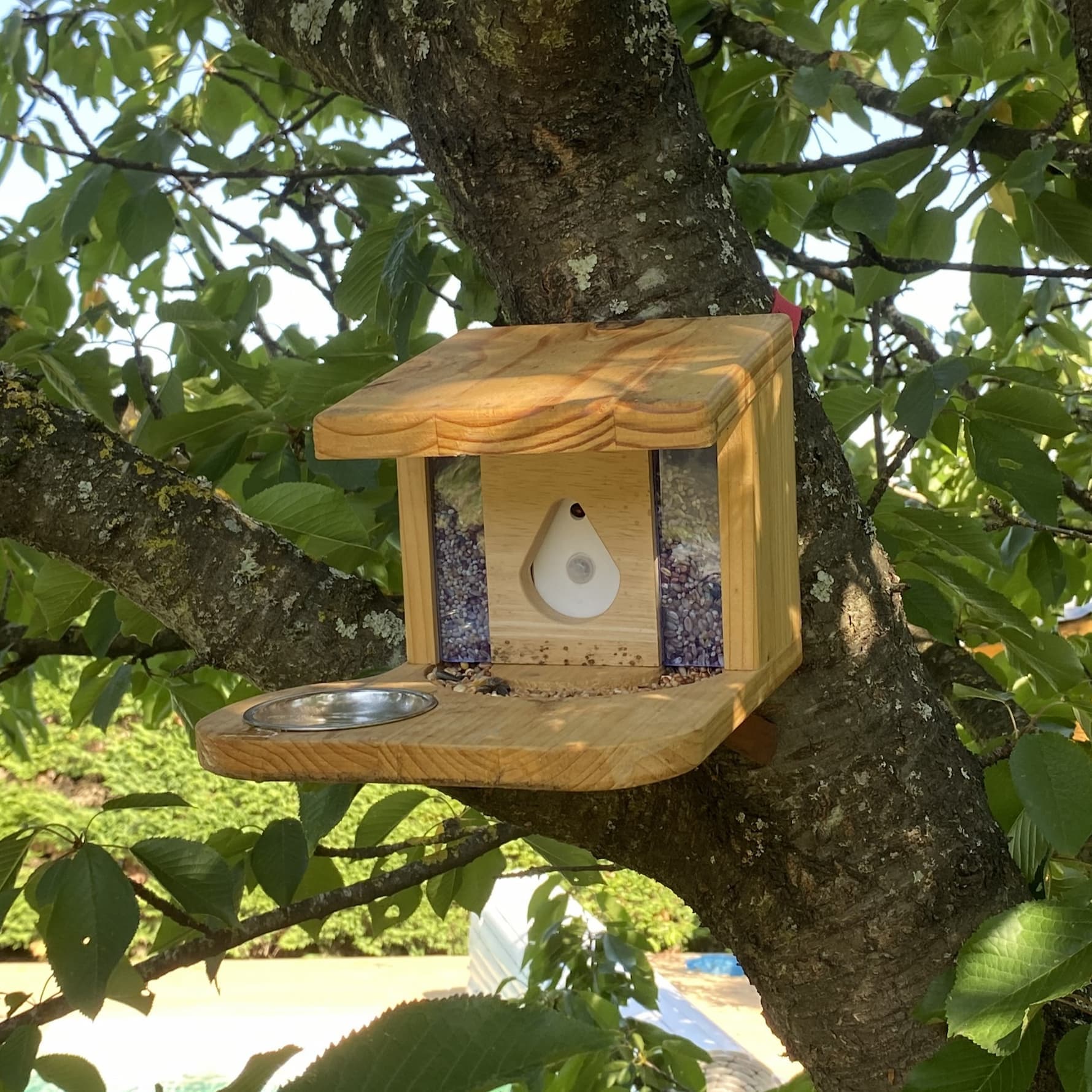
Built for children. Awarded by professionals.
September 2021. IMT Nord-Europe. A course called ‘Open Project’: find an idea, find a client, deliver. With four other students, we designed a connected bird feeder called Bird-e that photographs visiting birds and identifies their species using artificial intelligence. We installed it for a year 4 class at a primary school in Douai, running monthly workshops on local wildlife. The children looked forward to these visits.
At the end-of-year presentation, the professors didn’t just congratulate us. They told us to keep going. “This is a real startup idea.” Three of us decide to go for it: Lucas on product and communication, Clément on AI, me on the full technical stack.
June 2022. IoT Creative Challenge by CITC EuraRFID, before a jury composed of MEL, Inria and the Région Hauts-de-France. We defend our prototype against established startups and leave with two awards: the MEL Prize and the Start Prototype Prize. The only students in the edition to win multiple distinctions. It is no longer just our conviction: a jury of professionals has just confirmed that the idea is worth pursuing.
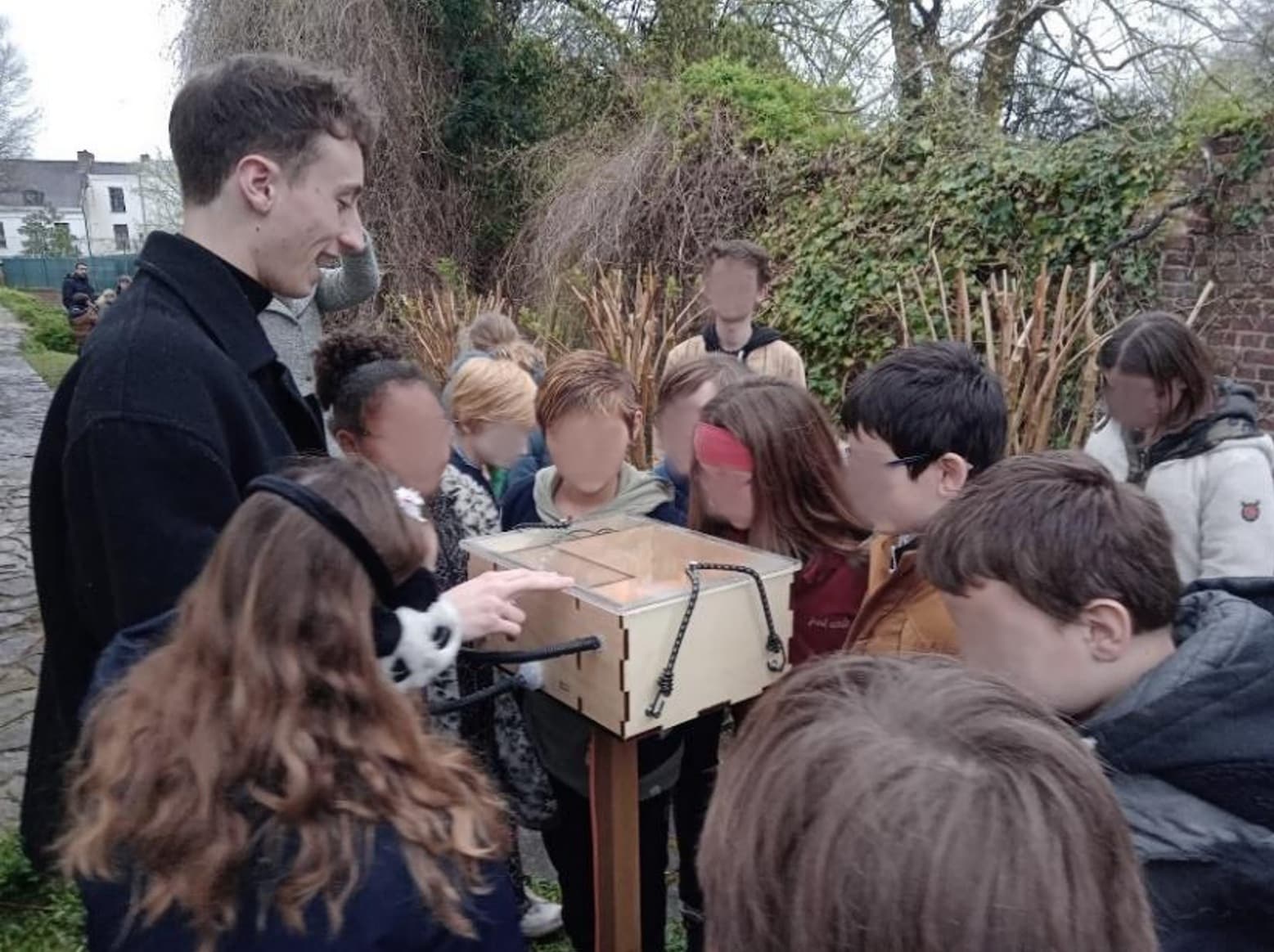
Bird-e installation · École Victor Bufquin, Douai · 2022
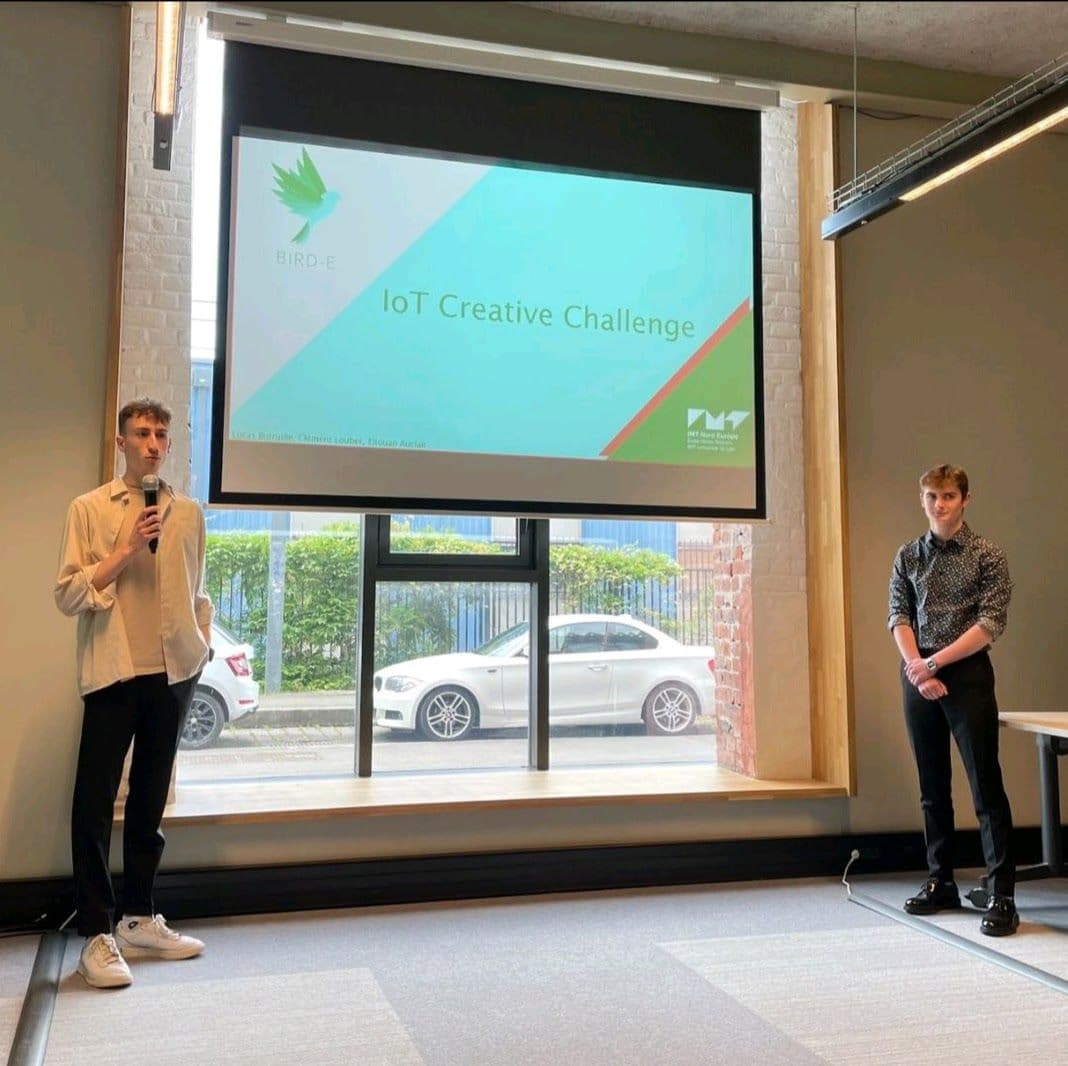
Selection pitch · IoT Creative Challenge · June 2022
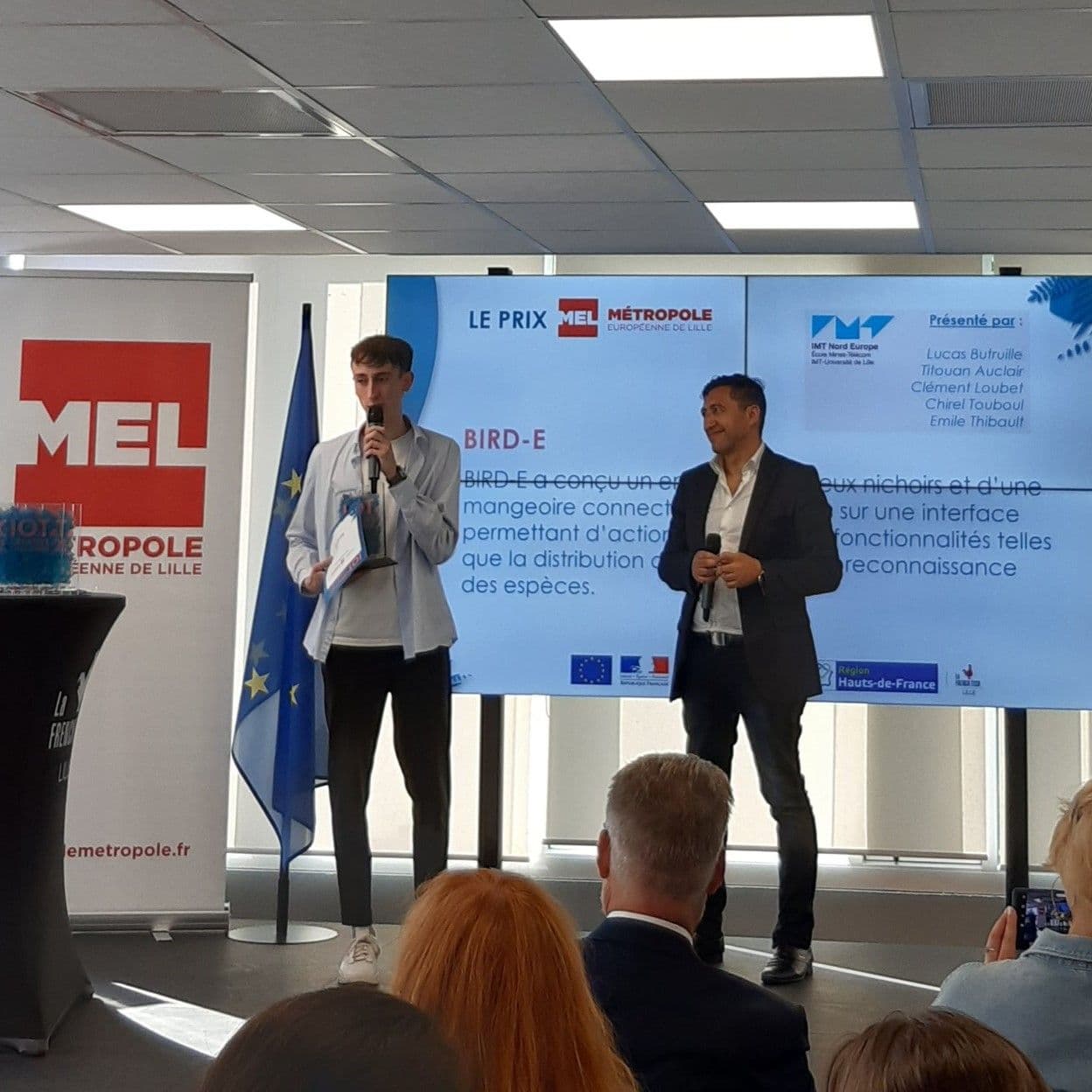
MEL Prize ceremony · French Tech Lille · June 22, 2022
Selected by juries. Funded by strangers.
Building on the CITC win, we make it official under a new name: OisiO, as Bird-e was already trademarked. National Student-Entrepreneur Status, integration into the APUI incubator at IMT Nord-Europe. We decide to apply to Les Pépites de la MEL, a Métropole Européenne de Lille programme for young project leads. From several dozen applications, ten projects are selected. OisiO is one of them.
Its goal: prepare selected projects for the launch of a crowdfunding campaign, supported by a full communication campaign orchestrated by the MEL. Over several months, we build OisiO's visual identity and campaign strategy. The MEL amplifies through videos, local press, social media and outdoor advertising.
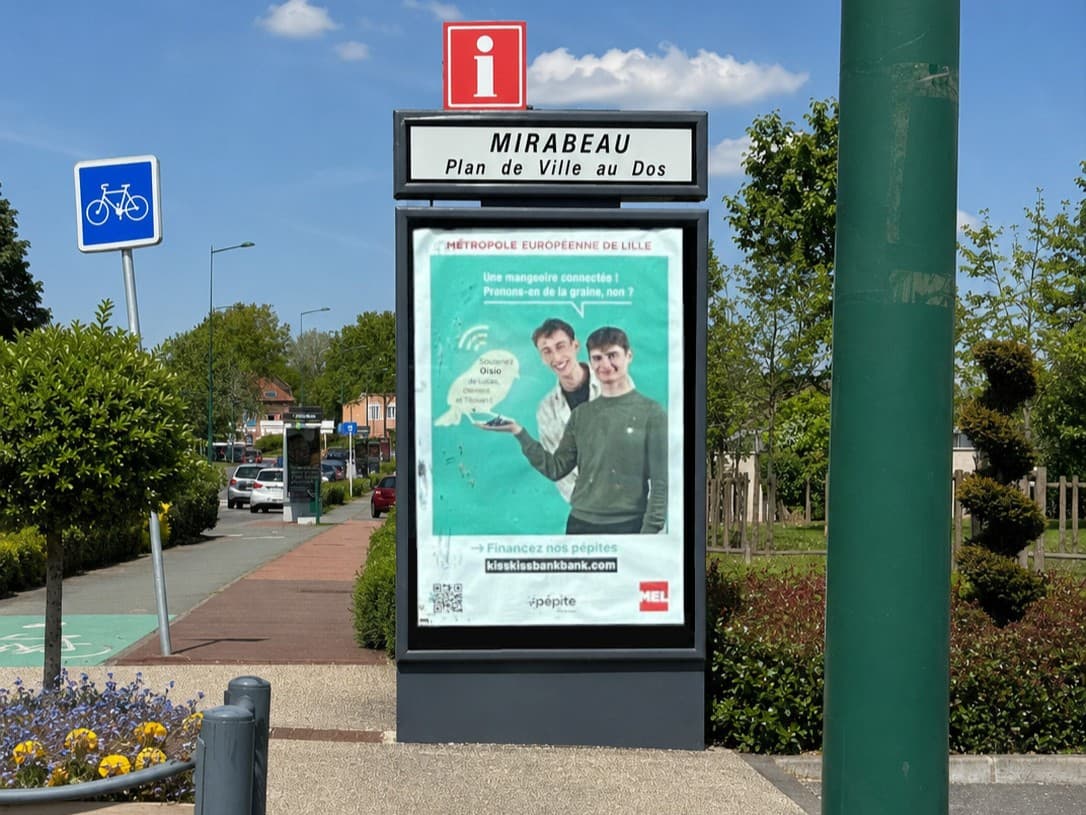
On May 16th, 2023, the campaign goes live on KissKissBankBank. Target: 3,000€ to develop the final product. For the first time, the idea is no longer judged by an institutional jury, but by strangers who freely choose to put their own money on it.
The campaign exceeds its target by a wide margin. It is proof of real enthusiasm, the ultimate confirmation. This financial support becomes the momentum to develop the first versions. It was no longer a school project.
KissKissBankBank campaign
May 16 → July 17, 20235 369 €
raised
179%
of the target
67
contributors
19
pre-orders
Embedded, cloud, AI, mobile. Built end to end.
The OisiO feeder installs in any garden. Powered by a rechargeable battery, it connects to WiFi, detects bird arrivals via an infrared sensor, takes a photo and automatically sends it to the cloud. Our own AI model identifies the species from 48 common French birds. Users find their garden visitors in the mobile app, with the species description.
Architecture
My contribution
Cross-platform app
Flutter app enhanced and published on the App Store and Play Store, connected in real time to Firebase. Photo feed, species sheets, favourites, push notifications and feeder setup via Bluetooth.
Embedded software
C++ firmware for ESP32: PIR motion detection, photo capture, Bluetooth setup and automatic cloud upload. All under tight memory and battery constraints.
Species recognition API
REST inference API exposing Clément's AI model: species and confidence score per photo, across 48 French species. Built with FastAPI, containerised with Docker and deployed on a VPS.
Firebase Backend
Serverless Firebase backend: authentication, NoSQL database and cloud storage for photos. Python Cloud Functions trigger automatically on each upload to drive the species recognition pipeline.
Electronics & 3D design
Co-designed the embedded electronics: lithium battery circuit and low-power PIR sensor. Multiple weatherproof enclosure prototypes modelled in Fusion 360, bio-sourced PLA for outdoor use.
OisiO Club
Flutter web portal developed and deployed in 6 weeks to keep campaign contributors in the loop: real-time prototype photos from the Firebase backend. Built solo, from design to VPS deployment.
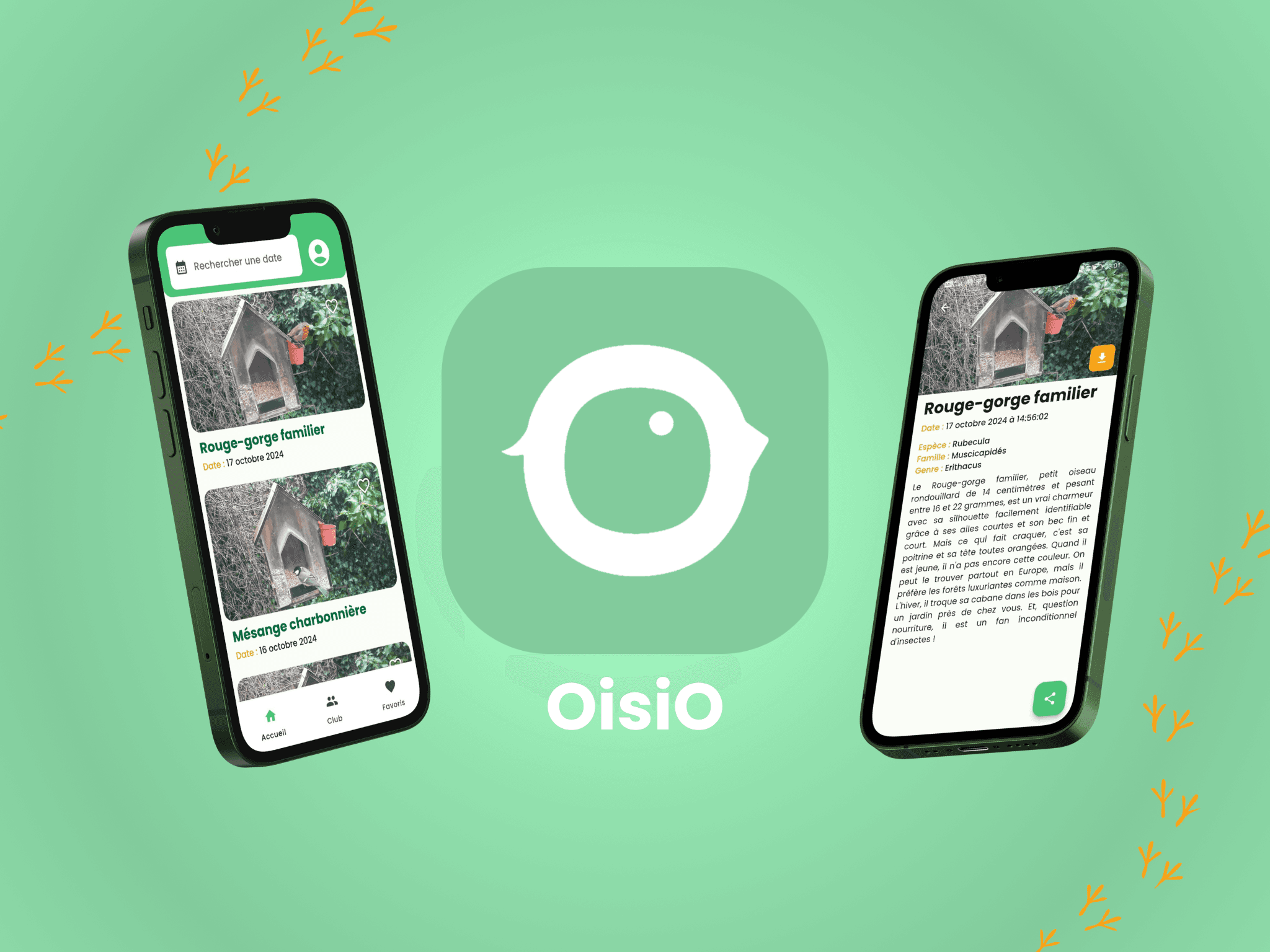
Mobile app · Real-time species detection
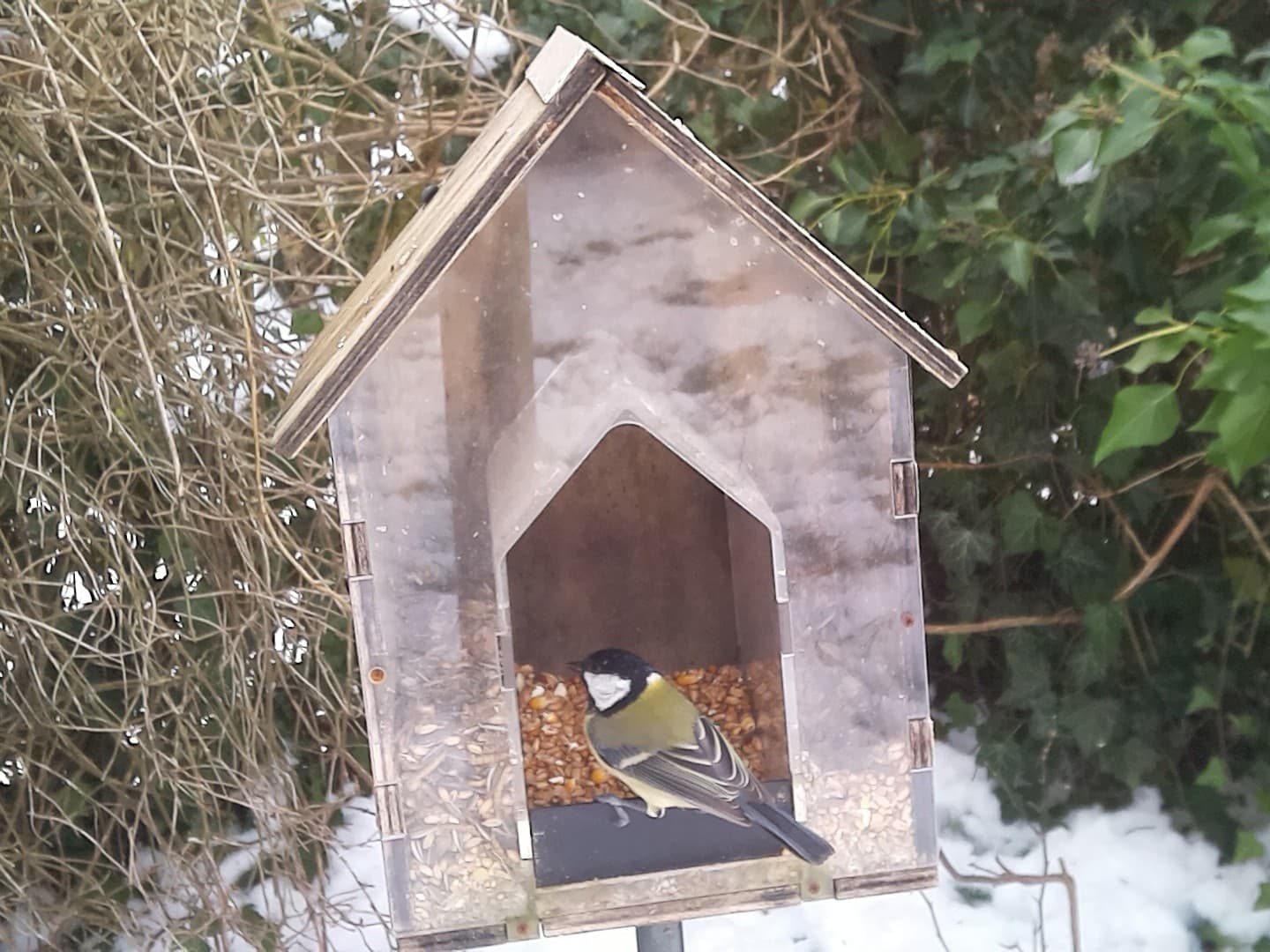
One of the prototypes · Raspberry Pi · a visitor stopping by
Between planned and lived.
This product is the result of several years of exploration and dead ends, not a linear progression. But building is not the same as delivering. Limits eventually made themselves known.
From prototype to the real world.
The prototype validated an idea in an environment we controlled. The product had to work for anyone, on any network, on its own, on battery. Each constraint seemed solvable in isolation. Tackled together, they turned what looked like a few months of development into several years.
Embedded, a different craft.
The firmware we produced reaches a solid intermediate level. The real limit was in the card's constraints: implementing all the features properly on hardware this limited in memory requires an optimisation expertise in embedded development I hadn't built. I progressed as a developer, particularly in web and mobile through my professional choices, not enough in embedded for what this project demanded. Shipping pre-orders without being able to maintain or evolve the product made no sense.
Building for others.
Nineteen people were waiting for the feeder they had pre-ordered. Every delay pushed back a commitment. Building for yourself and building when people are waiting for a result are not the same thing. You cannot delay indefinitely.
Knowing when to stop. An engineer's decision.
February 2025. Nearly four years after the start of the adventure, two years after the campaign. We send an email to our contributors.
Despite all our efforts, we are not able to bring OisiO to completion. Our lack of expertise in this specific domain ultimately caught up with us. Even if OisiO will not come to life as we had imagined, we do not consider this adventure a failure.
Titouan, Lucas and Clément · February 2025
The response from our contributors surprised us. Many chose not to be refunded, or only partially, to help us cover the costs incurred. Messages of encouragement, among them: 'I enjoyed following the adventure.' We offered to send the feeders already produced, without the connected system.
A few months later, out of curiosity, I retested the firmware on a newer and more powerful version of the same board. A few modifications. It worked. Enough to imagine a next chapter.
Four years. Three lessons.
On architecture
Firebase was the right call: shipping something stable without yet having the skills to build the equivalent ourselves. In production, costs grow with users, and without recurring revenue to absorb them, it becomes unsustainable. With the experience gained since, I would make a different choice: I've learned to evaluate what can be delegated to a vendor, and what is better kept under your own control.
On technical breadth
OisiO spanned five very different domains: embedded, cloud, AI, mobile, hardware. Most of the technical load rested on me, with no outside perspective technical enough to challenge my choices. In a multi-domain project, complexity doesn't add up — it multiplies: you either need to narrow the scope, or build the right complementary expertise around you.
On entrepreneurship
I genuinely enjoyed wearing all these hats: strategy, pitches, fundraising, communication. But the technical side is where I want to keep investing my energy: solving complex problems, designing architecture, shipping something that works. This project also taught me that technique alone is not enough: it only makes sense when it addresses precisely the right problem.